
As part of the ongoing Phase II WEFE Nexus Assessment in Albania under the GEF UNEP/MAP MedProgramme, a detailed analysis of the current condition of the Çorrush Reservoir and its associated infrastructure was carried out. This analysis resulted in a comprehensive set of proposed interventions prepared to guide the future modernization of the reservoir and its surrounding agricultural and rural landscape.
A major challenge with wide-ranging cross-sectoral impacts identified in Phase I was the urgent need to rehabilitate Albania’s irrigation and drainage infrastructure, particularly its network of reservoirs. Albania is home to approximately 625 reservoirs serving irrigation purposes, most of which were designed and built decades ago, with many operating for over 50 years. Over time, a combination of limited maintenance, deforestation, and land erosion has caused significant sediment deposition, reducing average storage capacity by around 50% and raising safety concerns for numerous reservoirs. Compounding this challenge, periods of reduced precipitation often result in insufficient water availability during the summer months.
Watch a video on the Phase I Nexus Assessment in Albania here:
In Phase II, within the framework of Child Project 2.2 "Mediterranean Coastal Zones: Managing the Water-Energy-Food and Ecosystems Nexus”, executed by UNEP/MAP and GWP-Med, the Nexus Assessment dived deeper into these interconnections, exploring detailed options and scenarios for multi-purpose reservoir use. The objective of this work is to provide decision-makers, project developers, and funding institutions with a clear overview of the investment needs and suitable funding mechanisms that could support their implementation. The interventions are grouped into five thematic packages: Reservoir and Dam Optimization; Irrigation and Drainage Rehabilitation; Agriculture and Irrigation Efficiency; Renewable Energy Integration; and Tourism and Recreation Development, reflecting the main priorities of the Çorrush area.
1) Reservoir and Dam Optimization
A series of structural and environmental measures have been proposed to improve the safety, storage capacity, and operational efficiency of the Çorrush Reservoir. These include repairing dam erosion and riprap, reinforcing the dam crest and body to sustain traffic loads, and installing monitoring equipment to strengthen early-warning systems and risk management. Rehabilitation of the emergency spillway and bottom outlet, along with rerouting the road currently crossing the spillway, will ensure safer reservoir operations. Beyond engineering upgrades, the plan introduces a large-scale ecological restoration programme covering 10 km² of the basin. Through reforestation and Nature-based Solutions, this measure aims to stabilize soils, reduce sediment inflow, and improve long-term watershed resilience. Together, the structural and ecosystem-based measures provide a holistic approach to optimizing reservoir performance and extending its operational lifespan.
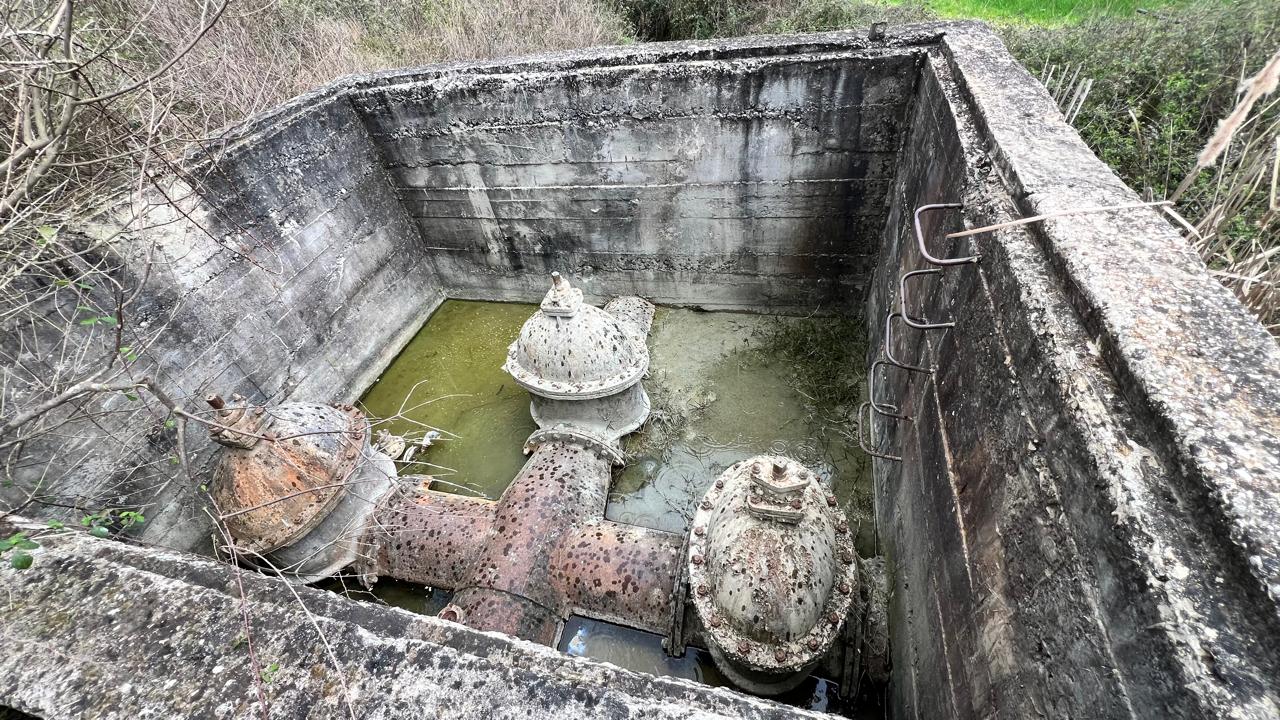
Dam Outlet structure, Çorrush Reservoir. The metal components, including the valves and pipes, show significant rust and oxidation, which can reduce their structural integrity and operational reliability.
2) Irrigation and Drainage Rehabilitation
Three scenarios for rehabilitating the irrigation and drainage system were assessed, ranging from minimal rehabilitation of the existing gravity-fed network to full conversion into a pressurized system. The recommended solution is a hybrid model (Scenario 3), which combines gravity-fed canals in the lower lands with a pressurized, solar-powered system for the upper agricultural areas. Key components include a new pumping station, installation of solar panels to supply energy, construction of HDPE pipeline networks, mechanical cleaning of existing canals, and installation of modern control structures and water meters. This approach balances technical feasibility, energy efficiency, and long-term sustainability while improving water distribution reliability across all command areas.
3) Agriculture and Irrigation Efficiency
To enhance climate resilience and agricultural productivity, several measures are proposed that promote efficient water use and modern farming practices. These include introducing low-water-demand crops such as sorghum, red clover, and selected medicinal and aromatic plants; expanding sprinkler and drip irrigation systems; and applying soil moisture sensors to improve irrigation scheduling. Complementary soil conservation practices; minimum tillage, green manure, mulching, and organic fertilization, will help reduce erosion, improve soil health, and maintain water retention. The combined package supports a transition toward more climate-smart, market-responsive agriculture.
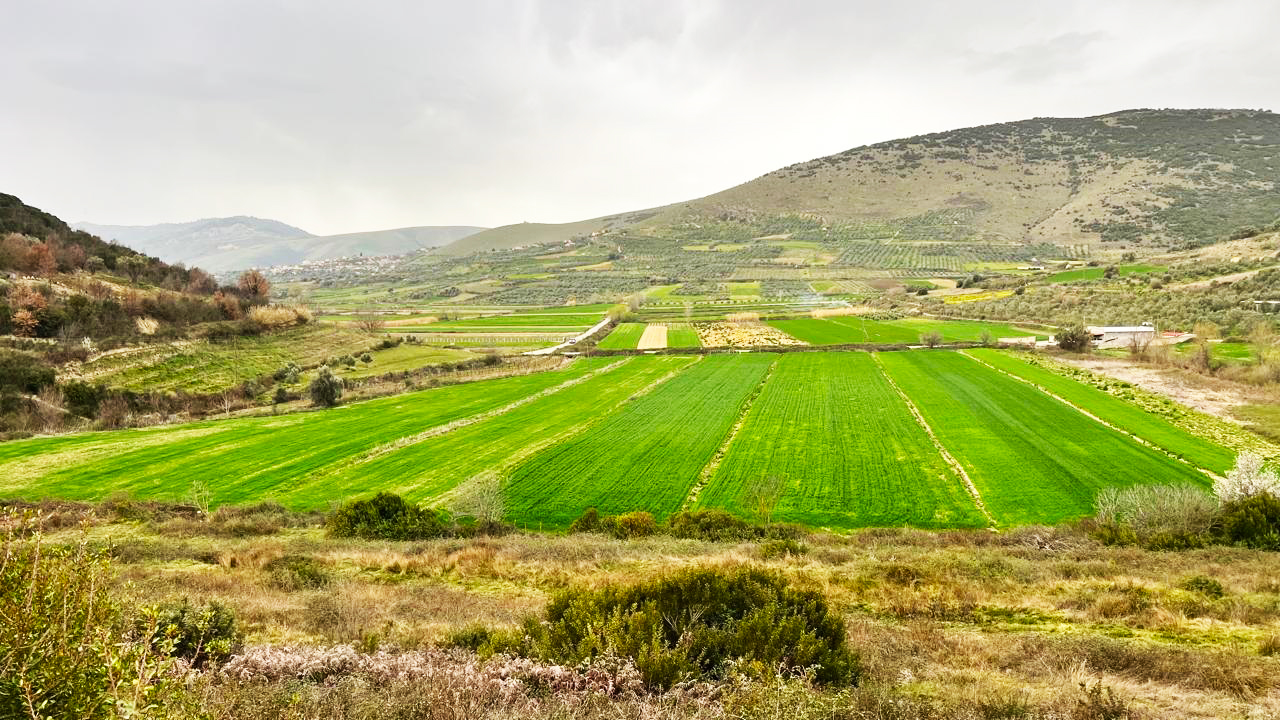
To improve the situation in the agricultural fields in the area irrigated by the Çorrush reservoir there are a number of measures that should be implemented that should be oriented to increasing the water use efficiency through irrigation and cultivating plants that have a lower transpiration rate and increasing moisture conservation and water-holding capacity of the soil.
4) Renewable Energy Integration
The reservoir area offers substantial potential for integrating renewable energy solutions. Three options were assessed: solar panels along the reservoir’s roads, floating solar systems, and solar installations above irrigation canals. Evaluations showed that solar panels placed along the side roads represent the most practical and cost-effective option. For the hybrid irrigation scenario, a 250 kW photovoltaic system is sufficient to power the new pumping station and associated infrastructure. Remaining below Albania’s licensing threshold, the system facilitates self-consumption, reduces energy costs, and ensures operational reliability with the flexibility for future expansion.
5)Tourism and Recreation Development
Although currently underdeveloped, the Çorrush Reservoir has strong potential to serve as a local eco-tourism destination. The proposed measures aim to develop tourism in an environmentally sensitive and community-driven way. They include installing multilingual signage, lighting along the dam crest, eco-friendly visitor facilities (picnic areas, composting toilets, waste stations), and improved access and parking. Four marked hiking and walking trails will offer nature-based recreational opportunities, while shoreline benches will enable fishing and relaxation. A dedicated promotional strategy; social media outreach, online listings, collaboration with local guides, will raise visibility and attract visitors. Agro-tourism initiatives linked to local olive farming, such as seasonal festivals and guided tours, will diversify income streams and strengthen cultural identity.
Cross-cutting Inclusion of Women and Youth
All components of the intervention plan integrate gender and youth inclusion. Measures include ensuring equitable participation in consultations and providing vocational training and working opportunities in agriculture, tourism, and resource management. This approach ensures that the modernization of the Çorrush Reservoir supports not only environmental and economic outcomes but also social equity and local capacity building.
By combining structural upgrades with Nature-based Solutions, energy-efficient irrigation, solar power, improved farming practices, and eco-tourism initiatives—while embedding gender and youth inclusion throughout—the proposed measures aim to strengthen safety, resilience, productivity, and livelihoods across the Çorrush agricultural and rural landscape.
More on the Assessment on the WEFE Nexus in Albania Phase I can be found here.
(Photographs by IRDA)