
To advance the effective implementation of the "SDG6.5.1 Evaluation and Application Research at County Level" Programme, an expert research team conducted a field investigation in Chengdu from January 15 to 16, 2026. Led by Jiang Yunzhong, Vice President of IWHR, the 10-member team comprised Zhang Ning, Section Chief, and Wang Shuai from the China International Center for Economic and Technological Exchange under the Ministry of Commerce, as well as Jia Yangwen, Regional Coordinator and Vice Chair of the Technical Committee of GWP China, and other Technical Expert Committee (TEC) members of GWP China, including Niu Cunwen, Wang Lin, and You Jinjun.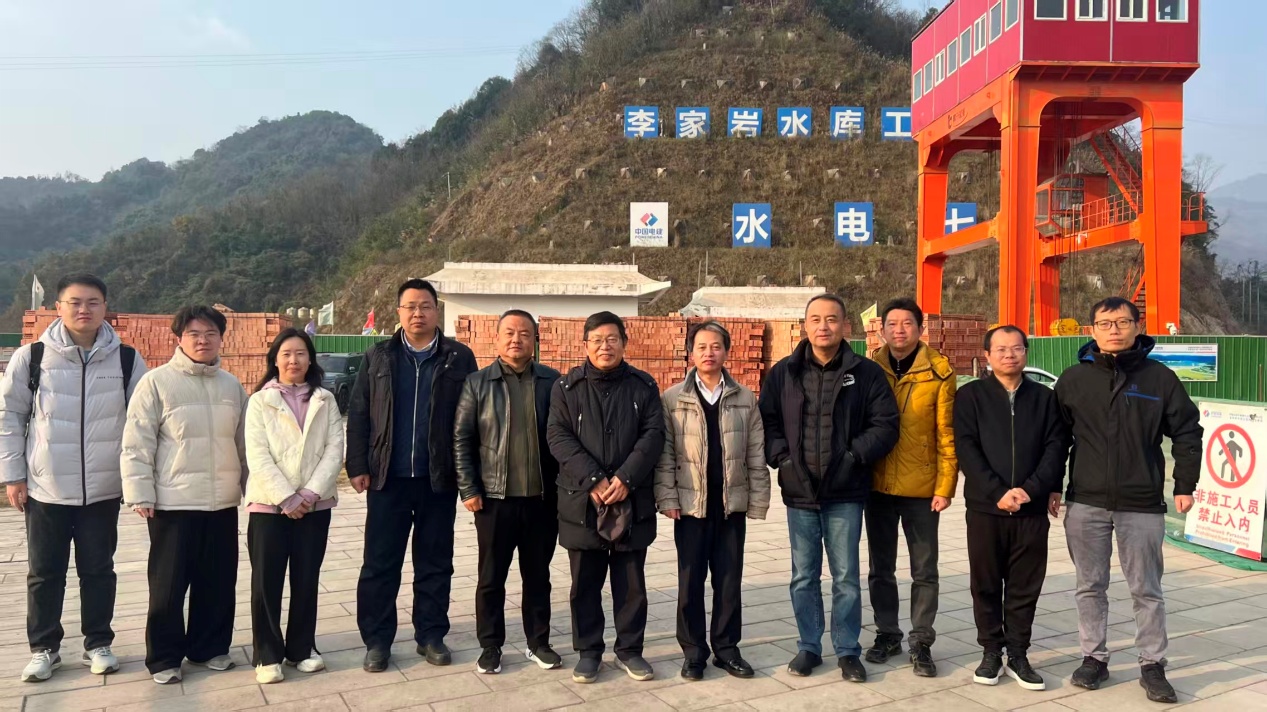
The expert research team
During the field visits, the team first inspected the Lijiayan Reservoir – Chengdu's "second water source" – which fulfills comprehensive functions such as urban water supply, emergency reserve, agricultural irrigation, and hydropower generation. The researchers focused on verifying the reservoir's project construction quality, clarifying its functional positioning, and assessing the operation of its water resources management system. Special attention was paid to the standardized delineation of drinking water source protection areas and the effective implementation of flood forecasting schemes during the construction phase. This on-site investigation yielded detailed first-hand data, laying a solid foundation for the subsequent optimization of integrated water resources management strategies.
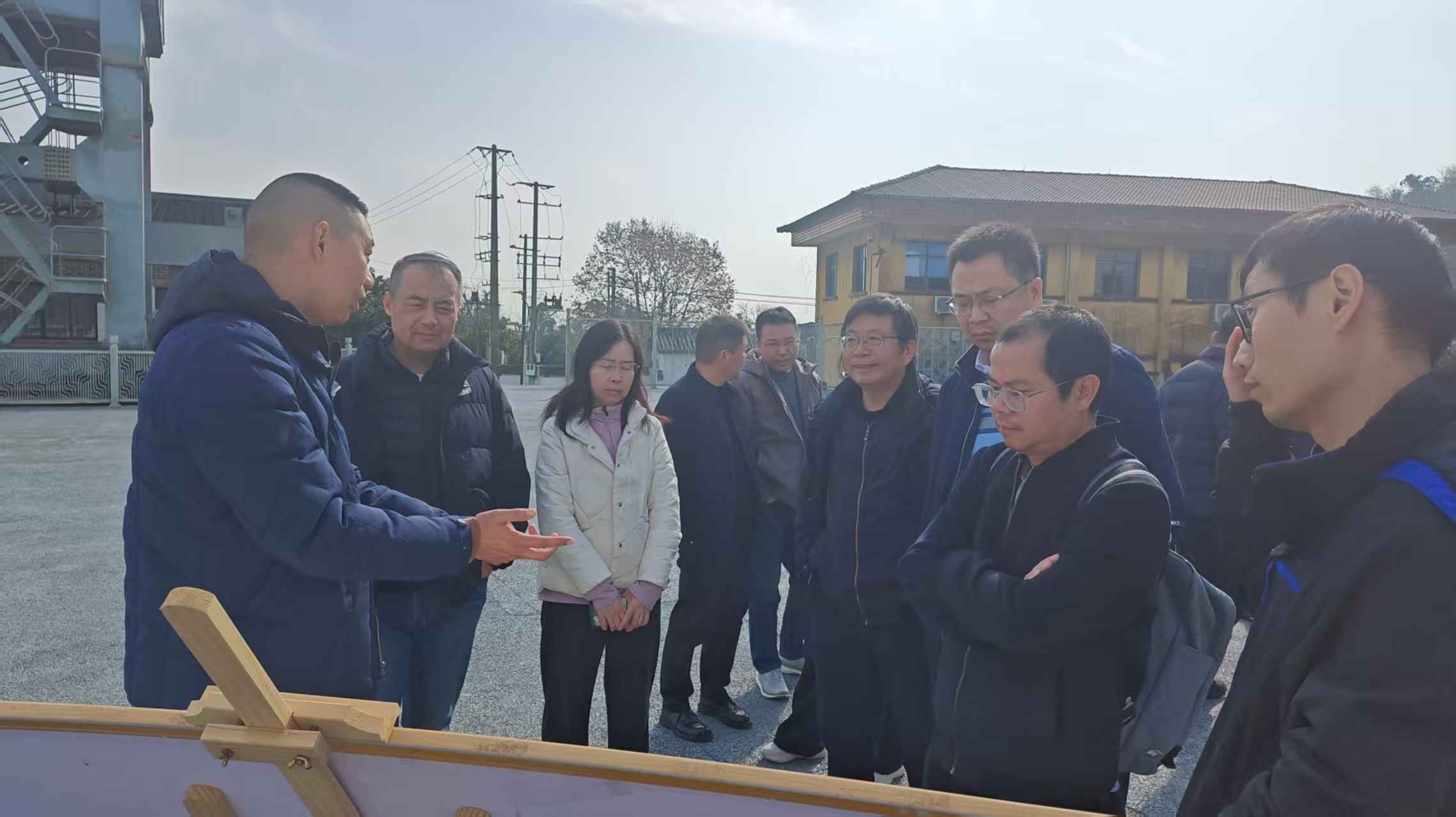
Jianjiang Weir
Subsequently, the research team traveled to Pengzhou City to conduct a specialized field study on the Jianjiang Weir, a designated World Irrigation Heritage Site. The team systematically traced the project's historical evolution, thoroughly evaluated the inheritance of its irrigation functions, and comprehensively assessed the progress of contemporary water conservancy construction, the level of refined water resources management, and the practical outcomes of aquatic ecological protection. During the visit, in-depth consultations were held with the Pengzhou Water Conservancy Bureau regarding potential water feedback projects, encompassing the pathways for transforming aquatic ecological value and the enhancement of water cultural connotations.
In addition to the field inspections, the team organized two thematic work seminars in Chengdu and Chongzhou respectively. At the seminars, Chengdu Water Conservancy Bureau Deputy Director Cheng Peizhe and other relevant authorities delivered comprehensive briefings on the overall status of regional water resources management. Participants conducted multi-dimensional and in-depth deliberations on core topics, including the mechanism for transforming aquatic ecological product value, the construction of government-enterprise collaborative cooperation models, and the application of informatization management tools. Focusing on the actual situation of water resources management in Chongzhou, the attendees engaged in targeted discussions on key areas such as the construction of integrated urban-rural water supply systems, the optimization of water-saving incentive policies, the establishment of dynamic flow control mechanisms, and the standardization of cross-border water rights transactions. Practical issues, including the participation of private capital in water conservancy infrastructure construction, the promotion and application of smart water conservancy systems, and the implementation of agricultural water subsidy policies, were also thoroughly deliberated.
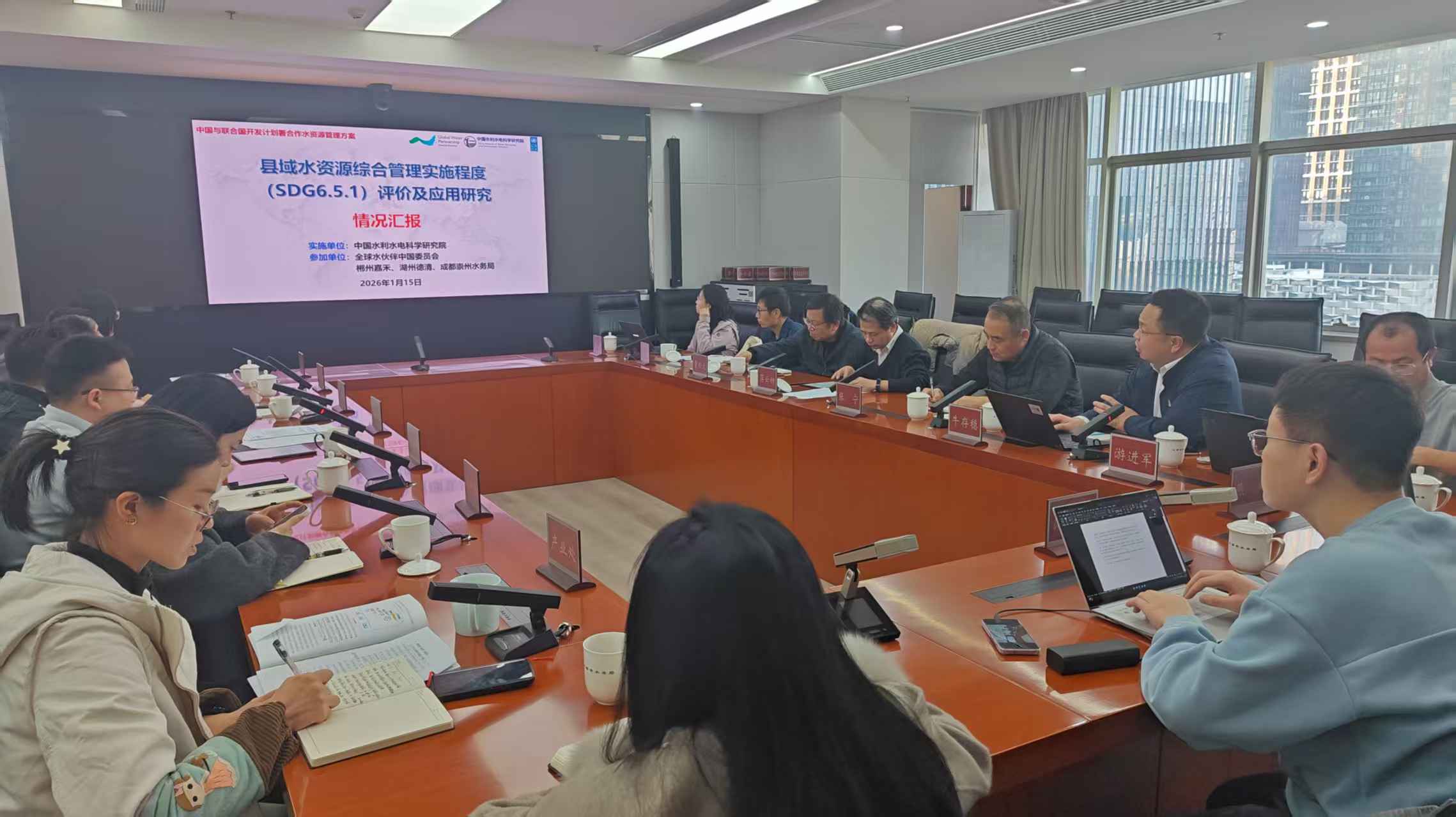
Thematic Seminar in Chengdu
Building on these extensive discussions, the research team put forward targeted and operable guiding opinions on the construction of the evaluation index system, the optimization of evaluation methods, the improvement of evaluation mechanisms, and the standardization of implementation processes for the UN Sustainable Development Goal SDG6.5.1. These recommendations provide professional technical support for the localized landing and efficient implementation of UN water-related sustainable development goals in China.
As a crucial component of the "SDG6.5.1 Evaluation and Application Research at County Level" Programme, this field investigation in Chengdu has effectively strengthened communication and cooperation among multiple stakeholders, further consolidated consensus on key work priorities, and provided solid safeguards for advancing the implementation of GWP's SDG6.5.1 water resources management framework in the evaluation and application of integrated county-level water resources utilization. Moving forward, the project team will continue to integrate on-site research findings with theoretical research, further promoting the localization and refinement of SDG6.5.1 indicators, and contributing Chinese wisdom and solutions to the global sustainable development of water resources.